In 30 years of real estate investing, one pattern keeps repeating: teams usually do not fail because they lack data. They fail because they cannot separate normal noise from real risk quickly enough.
After underwriting more than 500,000 properties, I treat collateral monitoring as a triage system. The objective is simple: review everything lightly, and review the risky minority deeply.
Start with the right question
Most workflows ask, “What is this property worth?” Operationally, the better question is, “Which properties need human review today?”
That shift matters. A portfolio team can usually process an exception queue. It cannot run full manual diligence on every asset every week.
A practical exception framework
The following thresholds are a reliable starting point for servicers, REITs, and SFR lenders. Tune them by market, but use consistent rules across the entire book:
- Value movement: Estimated value change greater than 8% since prior review period.
- Source divergence: Multi-source valuation spread greater than 12%.
- Rent drift: Rental estimate decline greater than 7%.
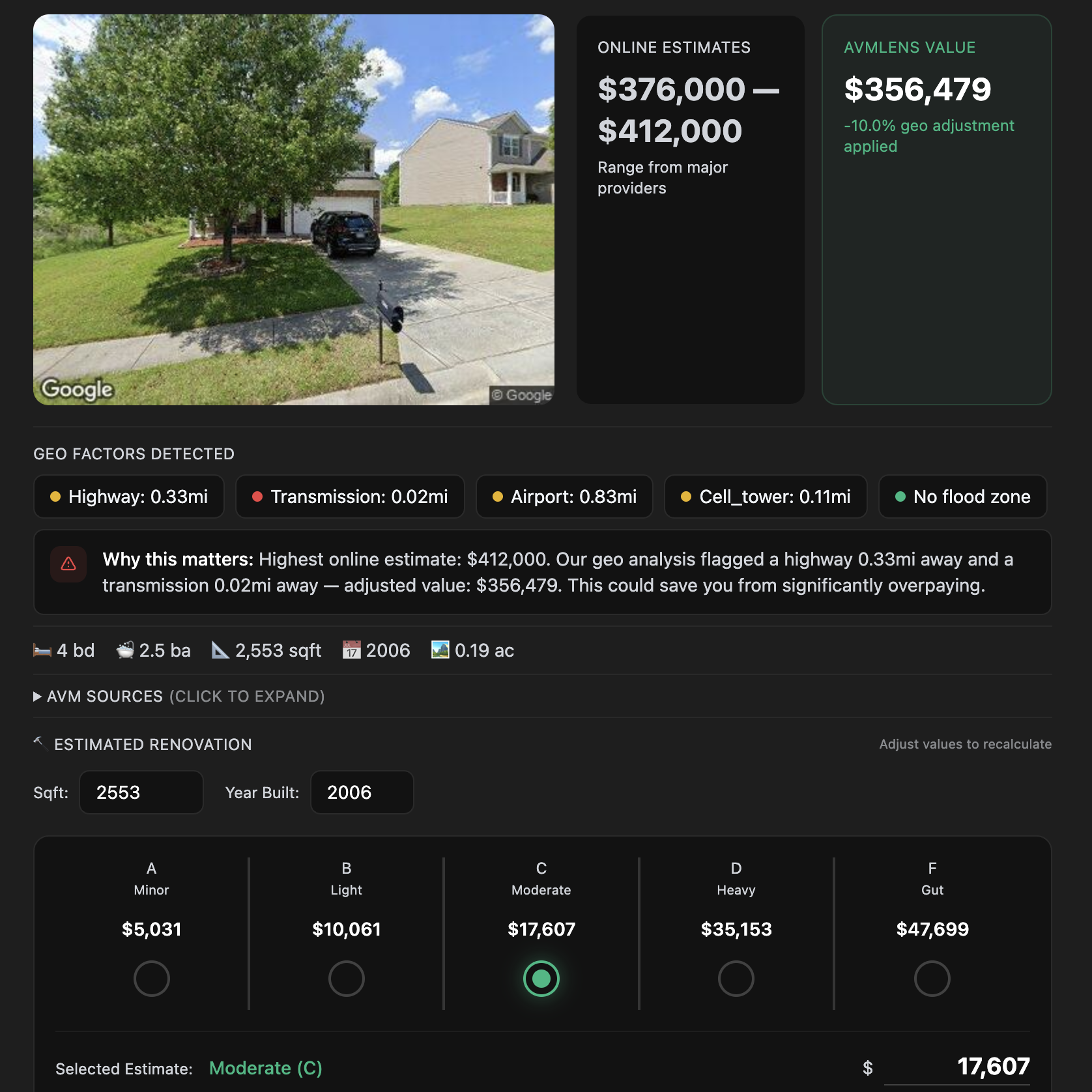
- Risk event: New high-impact geo-risk signal (flood, environmental, major infrastructure proximity).
- Confidence drop: Confidence tier downgrade from prior run.
If none of these triggers fire, the asset remains in monitoring status. If one or more triggers fire, it moves into analyst queue for a BPO/appraisal decision.
What to send to BPO versus monitor automatically
Use a two-lane model:
- Lane A — Automatic monitoring: Assets with stable value trend, low source spread, and no new risk events.
- Lane B — Escalation: Assets crossing one or more exception thresholds, or assets tied to high-balance exposures.
This keeps BPO budgets focused where they create decision value. In practice, many teams find only 10-25% of assets require deeper review in a typical cycle.
Implementation checklist (first 30 days)
- Week 1: Define thresholds by portfolio type and market volatility bands.
- Week 2: Backtest last 6-12 months of portfolio history against those rules.
- Week 3: Stand up exception queue output with clear trigger reason codes.
- Week 4: Start weekly cadence and track queue size, resolution time, and false positives.
Keep this simple early. A clean rules engine with strong logging beats a complex model nobody trusts.
Tooling note
You can run this workflow with internal systems, external vendors, or a blended stack. The non-negotiable piece is consistent exception logic and defensible evidence for escalation decisions.
Bottom line
Collateral monitoring works best when it is designed as triage, not blanket manual review. Keep broad coverage automated, escalate exceptions quickly, and reserve BPO/appraisal effort for assets that actually changed risk profile.
That approach reduces backlog, improves response time, and gives credit and risk teams a cleaner decision trail.